

The laboratories in Cell and Developmental Biology areas are engaged in cutting-edge research encompassing gene regulation, cancer biology, neurosystems, and reproductive system development and function. Experimental approaches include conventional and multidisciplinary tools, such as genetics, immunochemistry, transgenics, biochemistry, confocal and electron microscopy, tissue culture, genomics, and bioinformatics. Research questions are being addressed in both invertebrate and vertebrate model systems, including the nematode Caenorhabditis elegans, the fruit fly Drosophila melanogaster and mammalian cells. This broad range of activities provides excellent training opportunities for graduate and undergraduate students, and post-doctoral fellows.
Expandable List
- BIOL 6H03 / Molecular Biology of Cancer
- BIOL 720 / Bioinformatics
- BIOL 762 / Developmental Biology
- Education 750 / Principles and Practice of University Teaching
Explore the Graduate Courses page for more information
- The Bedard lab has uncovered new Src-kinase interacting genes associated with human cancers
- The Campos lab has found that insulin signaling regulates feedling behavior in Drosophila
- The Daniel lab has discovered proteins that regulate Wnt pathway function in cancerous growth and metastasis
- The Gupta lab has developed novel worm microfluidics chips for neurodegeneration and drug discovery research (Rezai et al., Lab Chip)
- Using Drosophila heart as a model, the Jacobs lab has shown that integrins play important roles in cardioblast polarization
- The Stone lab has developed a computational model to explain echinoid skeleton form and growth
- Research in the Zhu lab has led to new insights into the mechanism of telomere maintenance and genome stability
Cell & Developmental Biology
Andre Bedard
Professor
Research in my laboratory is centered on the study of cell proliferation and cell transformation. The control of gene expression in quiescent primary chicken embryo fibroblasts (CEF) is the focus of our current research program. In particular, we recently uncovered a novel response to the conditions of limited oxygen concentrations experienced by contact inhibited CEF and showed that this response is critical for the maintenance of lipid/membrane homeostasis and cell survival. Current investigations have for objective to characterize the cellular processes regulated by the lipid/membrane damage response promoting reversible growth arrest and survival of quiescent cells. To do this work we employ basic techniques of cell and molecular biology as well as genomic, proteomic and lipidomic approaches.

Juliet Daniel
Professor, Associate Dean, Research and International Relations
Cancer Biology, Cadherin-Catenin mediated Cell adhesion and Signaling, POZ Transcription Factors Our research goal is to understand the cellular and molecular basis of E-cadherin-mediated adhesion in normal cell growth, development and tumourigenesis. The primary epithelial cell-cell adhesion system involving E-cadherin and its catenin cofactors a-, b-, g- and p120ctn, is perturbed in ~50% of human metastatic tumours, and this correlates with the invasive phenotype. Interestingly, the catenins also function as transcriptional regulators of genes involved in tumourigenesis. My laboratory focuses on the transcription factor Kaiso that was first identified as a specific binding partner for the catenin p120ctn, which is aberrantly expressed or absent in human breast, colon and skin carcinomas. Kaiso is a novel member of the POZ-zinc finger family of transcription factors implicated as oncoproteins or tumor suppressors, and currently it is the only known POZ protein with bi-modal DNA-binding and transcriptional repression activity; Kaiso recognizes a sequence-specific consensus, TCCTGCNA, or methylated CpG-dinucleotides.

Juliet Daniel
Professor, Associate Dean, Research and International Relations
Ian Dworkin
Professor
At one level, evolution is remarkably simple, with just a few concepts (mutation, recombination, random drift and natural selection) that underlie the overall process. Yet this description obscures many issues that make evolution a fascinating area for study. Evolution typically involves many genes and often revolves around interactions between individuals and their environments. Moreover, genes interact with one another and with the environment in a nonlinear fashion, resulting in complex phenotypes and evolutionary dynamics. My work aims to describe and analyze such interactions with experimental and quantitative rigor. Specifically work in my lab aims to address the fundamental question about the mechanistic basis of observed phenotypic variation. That is, how genetic (and environmental) variation modulate developmental processes and ultimately influence phenotypic outcomes. My research employs genetic and genomic approaches to address these issues, largely using Drosophila (fruit flies) as a model system. Most labs that work with Drosophila study either individual mutations of large effect (such as those that completely knock out a particular function) or subtle quantitative variation (rarely identifying specific genes). We employ both of these empirical approaches in conjunction with our genomic analyses to help relate our understanding from developmental genetics with the natural variation observed in populations.

Bhagwati Gupta
Professor
Vulval development in Caenorhabditis elegans, Regulation and function of gene networks, Evolution of developmental mechanisms Specification of cell fate during development involves a large number of genes that interact with each other and are expressed in dynamic patterns. My lab is interested in understanding the function and evolution of gene networks that control cell proliferation and differentiation. Alterations in gene regulation have been shown to give rise to severe developmental abnormalities including hereditary diseases and cancers. Hence, a fundamental understanding of gene regulatory networks is critical for gaining important insights into the pathogenesis of human diseases. Toward this goal, we are studying vulva development in an established model organism, Caenorhabditis elegans and a closely related species, Caenorhabditis briggsae. The hermaphrodite vulva provides a unique opportunity to identify genes and study their regulation and function during development. In C. elegans, vulva is formed by the progeny of three out of six multipotential vulval precursor cells (VPCs) that divide three times to give rise to twenty-two cells. The vulval progeny differentiate during L4 larval stage to generate seven different cell types leading to the formation of an adult vulva. The invariant lineage of the VPCs and stereotypic positions of their progeny offer experimental analyses at single-cell resolution.
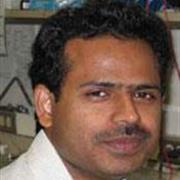
Muhammed Simsek
Assistant Professor

Jonathon Stone
Associate Professor, Director, Origins Institute, Associate Chair (Undergraduate Studies)
Astro-, Computational, Developmental, and Evolutionary biology (with smattering from Ecology and Physiology); Viruses to elephants, including human menopause and especially gastropods, echinoids, and water bears (oh my).

Jonathon Stone
Associate Professor, Director, Origins Institute, Associate Chair (Undergraduate Studies)
Xu-Dong Zhu
Professor
According to Canadian Cancer Society, cancer is the leading cause of premature death in Canada and an estimated one out of every four Canadians is expected to die from cancer. An underlying hallmark of cancer is genome instability, which can arise from the disruption of telomere maintenance. The Zhu laboratory is interested in elucidating the molecular mechanism by which human cells maintain their telomere integrity. Knowledge gained from these studies is expected to aid in the design of anti-cancer therapeutics and treatment of cancer patients. Currently the Zhu laboratory focuses on two research areas relevant to telomere maintenance and genome integrity: 1. Elucidating the role of post-translational modifications in telomere maintenance. 2. Elucidating the functional interaction between shelterin proteins and accessary factors.

Andre Bedard
Professor
Research in my laboratory is centered on the study of cell proliferation and cell transformation. The control of gene expression in quiescent primary chicken embryo fibroblasts (CEF) is the focus of our current research program. In particular, we recently uncovered a novel response to the conditions of limited oxygen concentrations experienced by contact inhibited CEF and showed that this response is critical for the maintenance of lipid/membrane homeostasis and cell survival. Current investigations have for objective to characterize the cellular processes regulated by the lipid/membrane damage response promoting reversible growth arrest and survival of quiescent cells. To do this work we employ basic techniques of cell and molecular biology as well as genomic, proteomic and lipidomic approaches.
Andre Bedard
Professor
Research in my laboratory is centered on the study of cell proliferation and cell transformation. The control of gene expression in quiescent primary chicken embryo fibroblasts (CEF) is the focus of our current research program. In particular, we recently uncovered a novel response to the conditions of limited oxygen concentrations experienced by contact inhibited CEF and showed that this response is critical for the maintenance of lipid/membrane homeostasis and cell survival. Current investigations have for objective to characterize the cellular processes regulated by the lipid/membrane damage response promoting reversible growth arrest and survival of quiescent cells. To do this work we employ basic techniques of cell and molecular biology as well as genomic, proteomic and lipidomic approaches.
Juliet Daniel
Professor, Associate Dean, Research and International Relations
Cancer Biology, Cadherin-Catenin mediated Cell adhesion and Signaling, POZ Transcription Factors Our research goal is to understand the cellular and molecular basis of E-cadherin-mediated adhesion in normal cell growth, development and tumourigenesis. The primary epithelial cell-cell adhesion system involving E-cadherin and its catenin cofactors a-, b-, g- and p120ctn, is perturbed in ~50% of human metastatic tumours, and this correlates with the invasive phenotype. Interestingly, the catenins also function as transcriptional regulators of genes involved in tumourigenesis. My laboratory focuses on the transcription factor Kaiso that was first identified as a specific binding partner for the catenin p120ctn, which is aberrantly expressed or absent in human breast, colon and skin carcinomas. Kaiso is a novel member of the POZ-zinc finger family of transcription factors implicated as oncoproteins or tumor suppressors, and currently it is the only known POZ protein with bi-modal DNA-binding and transcriptional repression activity; Kaiso recognizes a sequence-specific consensus, TCCTGCNA, or methylated CpG-dinucleotides.
Juliet Daniel
Professor, Associate Dean, Research and International Relations
Cancer Biology, Cadherin-Catenin mediated Cell adhesion and Signaling, POZ Transcription Factors Our research goal is to understand the cellular and molecular basis of E-cadherin-mediated adhesion in normal cell growth, development and tumourigenesis. The primary epithelial cell-cell adhesion system involving E-cadherin and its catenin cofactors a-, b-, g- and p120ctn, is perturbed in ~50% of human metastatic tumours, and this correlates with the invasive phenotype. Interestingly, the catenins also function as transcriptional regulators of genes involved in tumourigenesis. My laboratory focuses on the transcription factor Kaiso that was first identified as a specific binding partner for the catenin p120ctn, which is aberrantly expressed or absent in human breast, colon and skin carcinomas. Kaiso is a novel member of the POZ-zinc finger family of transcription factors implicated as oncoproteins or tumor suppressors, and currently it is the only known POZ protein with bi-modal DNA-binding and transcriptional repression activity; Kaiso recognizes a sequence-specific consensus, TCCTGCNA, or methylated CpG-dinucleotides.
Ian Dworkin
Professor
At one level, evolution is remarkably simple, with just a few concepts (mutation, recombination, random drift and natural selection) that underlie the overall process. Yet this description obscures many issues that make evolution a fascinating area for study. Evolution typically involves many genes and often revolves around interactions between individuals and their environments. Moreover, genes interact with one another and with the environment in a nonlinear fashion, resulting in complex phenotypes and evolutionary dynamics. My work aims to describe and analyze such interactions with experimental and quantitative rigor. Specifically work in my lab aims to address the fundamental question about the mechanistic basis of observed phenotypic variation. That is, how genetic (and environmental) variation modulate developmental processes and ultimately influence phenotypic outcomes. My research employs genetic and genomic approaches to address these issues, largely using Drosophila (fruit flies) as a model system. Most labs that work with Drosophila study either individual mutations of large effect (such as those that completely knock out a particular function) or subtle quantitative variation (rarely identifying specific genes). We employ both of these empirical approaches in conjunction with our genomic analyses to help relate our understanding from developmental genetics with the natural variation observed in populations.
Ian Dworkin
Professor
At one level, evolution is remarkably simple, with just a few concepts (mutation, recombination, random drift and natural selection) that underlie the overall process. Yet this description obscures many issues that make evolution a fascinating area for study. Evolution typically involves many genes and often revolves around interactions between individuals and their environments. Moreover, genes interact with one another and with the environment in a nonlinear fashion, resulting in complex phenotypes and evolutionary dynamics. My work aims to describe and analyze such interactions with experimental and quantitative rigor. Specifically work in my lab aims to address the fundamental question about the mechanistic basis of observed phenotypic variation. That is, how genetic (and environmental) variation modulate developmental processes and ultimately influence phenotypic outcomes. My research employs genetic and genomic approaches to address these issues, largely using Drosophila (fruit flies) as a model system. Most labs that work with Drosophila study either individual mutations of large effect (such as those that completely knock out a particular function) or subtle quantitative variation (rarely identifying specific genes). We employ both of these empirical approaches in conjunction with our genomic analyses to help relate our understanding from developmental genetics with the natural variation observed in populations.
Bhagwati Gupta
Professor
Vulval development in Caenorhabditis elegans, Regulation and function of gene networks, Evolution of developmental mechanisms Specification of cell fate during development involves a large number of genes that interact with each other and are expressed in dynamic patterns. My lab is interested in understanding the function and evolution of gene networks that control cell proliferation and differentiation. Alterations in gene regulation have been shown to give rise to severe developmental abnormalities including hereditary diseases and cancers. Hence, a fundamental understanding of gene regulatory networks is critical for gaining important insights into the pathogenesis of human diseases. Toward this goal, we are studying vulva development in an established model organism, Caenorhabditis elegans and a closely related species, Caenorhabditis briggsae. The hermaphrodite vulva provides a unique opportunity to identify genes and study their regulation and function during development. In C. elegans, vulva is formed by the progeny of three out of six multipotential vulval precursor cells (VPCs) that divide three times to give rise to twenty-two cells. The vulval progeny differentiate during L4 larval stage to generate seven different cell types leading to the formation of an adult vulva. The invariant lineage of the VPCs and stereotypic positions of their progeny offer experimental analyses at single-cell resolution.
Bhagwati Gupta
Professor
Vulval development in Caenorhabditis elegans, Regulation and function of gene networks, Evolution of developmental mechanisms Specification of cell fate during development involves a large number of genes that interact with each other and are expressed in dynamic patterns. My lab is interested in understanding the function and evolution of gene networks that control cell proliferation and differentiation. Alterations in gene regulation have been shown to give rise to severe developmental abnormalities including hereditary diseases and cancers. Hence, a fundamental understanding of gene regulatory networks is critical for gaining important insights into the pathogenesis of human diseases. Toward this goal, we are studying vulva development in an established model organism, Caenorhabditis elegans and a closely related species, Caenorhabditis briggsae. The hermaphrodite vulva provides a unique opportunity to identify genes and study their regulation and function during development. In C. elegans, vulva is formed by the progeny of three out of six multipotential vulval precursor cells (VPCs) that divide three times to give rise to twenty-two cells. The vulval progeny differentiate during L4 larval stage to generate seven different cell types leading to the formation of an adult vulva. The invariant lineage of the VPCs and stereotypic positions of their progeny offer experimental analyses at single-cell resolution.
Muhammed Simsek
Assistant Professor
Muhammed Simsek
Assistant Professor
Jonathon Stone
Associate Professor, Director, Origins Institute, Associate Chair (Undergraduate Studies)
Astro-, Computational, Developmental, and Evolutionary biology (with smattering from Ecology and Physiology); Viruses to elephants, including human menopause and especially gastropods, echinoids, and water bears (oh my).
Jonathon Stone
Associate Professor, Director, Origins Institute, Associate Chair (Undergraduate Studies)
Astro-, Computational, Developmental, and Evolutionary biology (with smattering from Ecology and Physiology); Viruses to elephants, including human menopause and especially gastropods, echinoids, and water bears (oh my).
Xu-Dong Zhu
Professor
According to Canadian Cancer Society, cancer is the leading cause of premature death in Canada and an estimated one out of every four Canadians is expected to die from cancer. An underlying hallmark of cancer is genome instability, which can arise from the disruption of telomere maintenance. The Zhu laboratory is interested in elucidating the molecular mechanism by which human cells maintain their telomere integrity. Knowledge gained from these studies is expected to aid in the design of anti-cancer therapeutics and treatment of cancer patients. Currently the Zhu laboratory focuses on two research areas relevant to telomere maintenance and genome integrity: 1. Elucidating the role of post-translational modifications in telomere maintenance. 2. Elucidating the functional interaction between shelterin proteins and accessary factors.
Xu-Dong Zhu
Professor
According to Canadian Cancer Society, cancer is the leading cause of premature death in Canada and an estimated one out of every four Canadians is expected to die from cancer. An underlying hallmark of cancer is genome instability, which can arise from the disruption of telomere maintenance. The Zhu laboratory is interested in elucidating the molecular mechanism by which human cells maintain their telomere integrity. Knowledge gained from these studies is expected to aid in the design of anti-cancer therapeutics and treatment of cancer patients. Currently the Zhu laboratory focuses on two research areas relevant to telomere maintenance and genome integrity: 1. Elucidating the role of post-translational modifications in telomere maintenance. 2. Elucidating the functional interaction between shelterin proteins and accessary factors.